
In 2024, nearly a third of Gen Z reported deleting a social media app (Deloitte, 2025). The scroll has lost its high, and now, one of the most addictive social media apps ever created - TikTok - is getting boring.
This is where Substack comes in. But it’s more than just a switch up from short to long form content. Substack acts as a new creative outlet for an old pastime: writing. It’s an easy to use, fun to read portfolio of thoughts, not polished to perfection, but informal, funny and real.
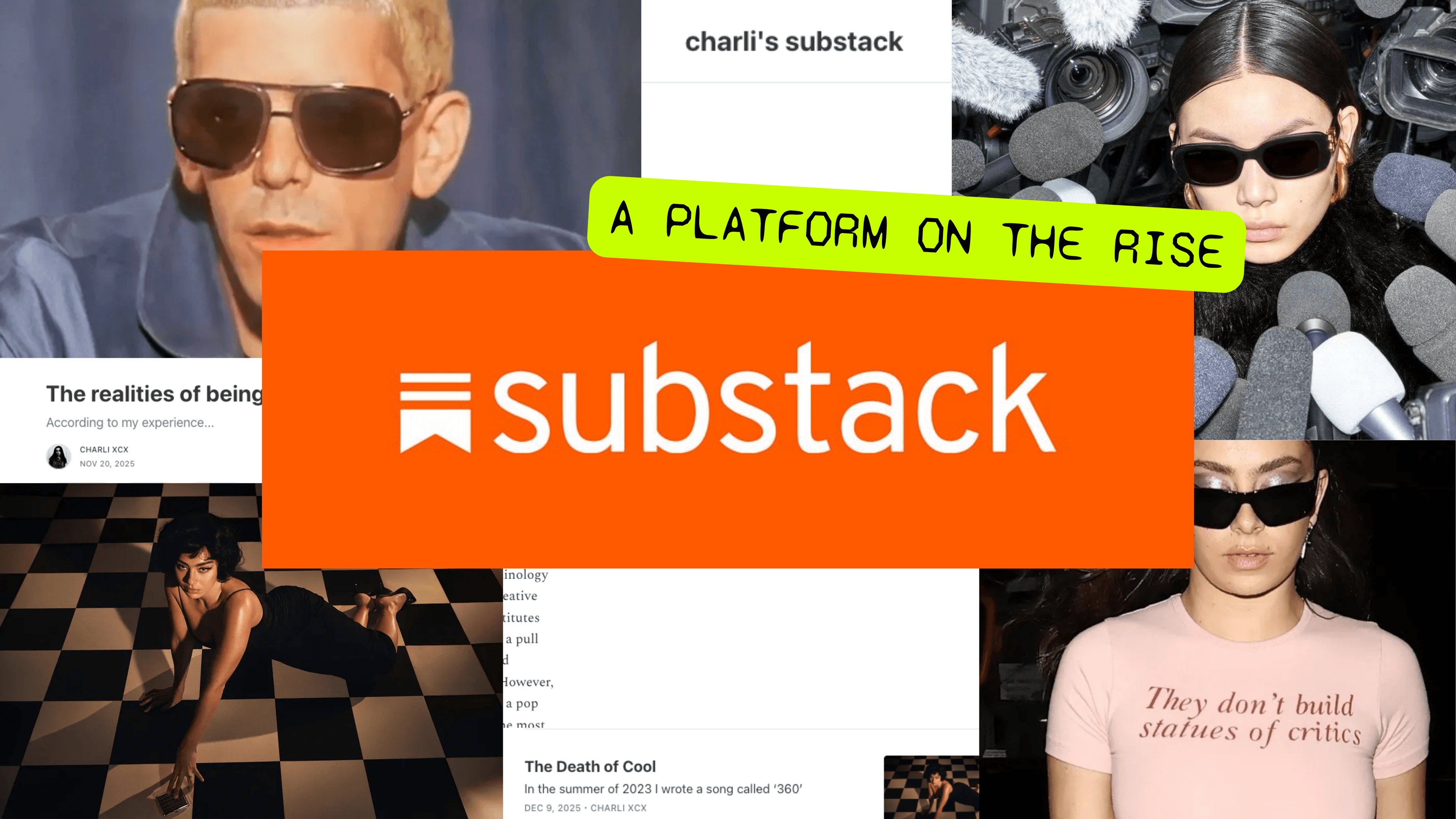
Another thing to say about Substack is that, at least for now, it’s cool. Social media platforms go in and out of being cool all the time. We’ve seen it with Facebook, we’ve seen it with BeReal, and we’re seeing it right now with TikTok. Even celebs like Charlie XCX have taken to Substack.
But why?
Because authenticity is attractive, and that’s exactly what the platform offers.
Substack is an online publishing platform that allows independent creators to send digital content (mostly newsletters, but also podcasts, videos, and livestreams) directly to subscribers.
Its core philosophy is to bypass the traditional, ad-driven media model (which incentivises clickbait) and replace it with a direct subscription model.
Substack is free for creators to use. If a writer decides to charge a subscription fee for premium content, Substack takes a 10% cut of the revenue.
Substack was founded in 2017 in San Francisco, but the platform blew up during the 2020 pandemic when many journalists faced layoffs.
By 2021, it had roughly 500,000 paid subscribers.
By 2026, it has surpassed 5 million paid subscriptions, valuing the company at over $1.1 billion following major funding rounds.
Originally, Substack was just a way to blast emails. However, it’s heavily expanded its features to drive internal growth. It launched the Substack App, a Twitter-like microblogging feature called Notes, and Substack Chat for community building.
The queen of pop is one of an increasing number of celebs who've taken to Substack, giving readers a rare window into her thoughts and world. From the realities of her life to the death of cool, Charlie is giving her fans an unapologetic insight into her mind, openly calling out haters and stereotypes.
“When I joined substack there were a flurry of think pieces and questions as to why. Some people theorized on the desire for long form content and a deeper connection with a fanbase, some people were just purely excited, some people suggested I might be heeding the advice of my record label in attempt to be omnipresent across all platforms, some people were surprised I even had enough brain cells left to write because of all that partying I do (!). The truth is I’ve always loved writing so why the fuck not?” - Charlie XCX, Substack, ‘The realities of being a pop star’
Charlie’s Substack is another move that highlights her ability to captivate a generation. She knows who she is and what she wants. It could be a business move, but it doesn’t feel like one. Her articles don’t read like there’s a PR team checking every word, and in a world of ads, that's refreshing.
It's not just celebs on Substack, but brands too.
Hinge posted their anthology of love stories, in a series called No Ordinary Love, that lives exclusively on Substack.
In 2025, a Rare Beauty employee took to Substack claiming to provide a “semi-authorised look behind the scenes at a bestselling beauty brand.”
Meta's Peter Buckley said, brands now need to be built “from the edges in”, and Substack is exactly that… the edges. It's on the edge enough to feel cool, uncensored, non-commoditised, but mainstream enough that more and more users are headed Substack’s way to find out what all the fuss is about.
Substack is a platform that serves the user, the people and the fans, not the brands trying to make money. As a result, people resonate with it. But much like using Reddit, Substack isn't a platform where you can please everyone and show up in different spaces. You need to know, and be a part of, your audience; to build from the edges in, as Peter Buckley puts it. In my opinion, those brands that already exist in the middle need to find their footing within the edges.
But how? Well, I think that brands need to be fans first. Your brand has its own personality, with likes, dislikes, opinions, and interests. So your brand should also have things that it 'fans' over. Follow, engage, observe, listen, then start creating content that is meaningful to your audience, partnerships that feel real and thought out, and actions that aren't just about sales.
Want a team to make this happen for your brand? OOB is a full-service social media agency in London, with strategy, content, paid and community under one roof.
This one's on us.
OOB is a social media agency. If this sparked something, let's talk.