




🗓️ 30.10.2025
Pinterest Statistics 2025: UK & Global Insights for Marketers
🕒 15 min read 🧑 by Sarah Fulford-Williams
Table of Contents
Introduction
Pinterest has evolved from a digital scrapbook to a major discovery engine for consumers and brands. While it lags behind platforms like Facebook in absolute scale, it punches above its weight in inspiration and purchase intent. Monthly active users rose to 537 million by the end of 2024 (demandsage.com), and Pinterest’s advertising tools reached 340 million people worldwide in January 2025 (datareportal.com). For UK marketers, the platform’s curated, positive environment offers a unique opportunity to influence high‑spending audiences – particularly women and millennials who use Pinterest to plan purchases and seek ideas. This article distils the latest data, focusing on global trends and UK‑specific insights to help you decide where Pinterest fits into your 2025 social strategy.
Quick Summary ✅
- 🌍 537 million people use Pinterest every month globally, with ads reaching 340 million users in January 2025 (demandsage.com, datareportal.com).
- 👩 Women dominate the platform: around 70% of Pinners are female (datareportal.com), and the largest age cohort is 18–24‑year‑olds (demandsage.com).
- 🇬🇧 UK adoption remains strong: 15.5 million active users (≈22% of the population) use Pinterest (metricool.com), and 70% of UK Pinners over 18 are women (notta.ai).
- 🛍️ Pinners love to shop: 85% of users worldwide have made a purchase after seeing a pin (demandsage.com), and 61% of UK users have bought something after seeing branded content (metricool.com).
- 💼 Marketing ROI: Pinterest ads are 2.3× more cost‑effective per conversion than other social ads, with shoppers spending 80% more per month than on other platforms (metricool.com).
- 📈 Revenue growth: Pinterest’s revenues rose 20% to $3.6 billion in 2024 (businessofapps.com), with 78% of revenue coming from the US despite only 18% of users being there (businessofapps.com).
Global Pinterest Statistics in 2025
Pinterest maintains a sizable global footprint, albeit smaller than Meta or TikTok. According to DataReportal and Pinterest’s ad tools, ads reached 340 million people in January 2025 (datareportal.com), up 10.6% from the previous year (datareportal.com). DemandSage reports that Pinterest’s monthly active users increased to 537 million by Q4 2024 (demandsage.com), reflecting steady growth from 498 million in Q4 2023 (demandsage.com).
User demographics
Pinterest’s audience skews female: 70.3% of users are women, with males accounting for 22.4% and the remainder unspecified (datareportal.com). Age analysis shows that the largest user segment is 18‑24‑year‑olds (29.6%), followed closely by those aged 25‑34 years (27.3%) (demandsage.com). Only 5.4% of users are 65+ (demandsage.com), highlighting its appeal to younger cohorts.
Pinterest is accessible worldwide but has notable geographic concentrations. In 2025, the United States remained the largest market with 89.9 million users, followed by Brazil, Mexico and Germany (demandsage.com). The United Kingdom ranked sixth with 14.68–15.5 million users (demandsage.com, metricool.com), underscoring a significant presence relative to population size.
Revenue and business performance
Financially, Pinterest posted $3.6 billion in revenue in 2024, up 20.3% year‑on‑year (businessofapps.com). Notably, 78% of this revenue comes from the US even though only about 18% of users are there (businessofapps.com). The platform reported net income of $1.8 billion in 2024, largely due to a deferred tax allowance (businessofapps.com). Advertising remains its primary business: by Q2 2024, Pinterest’s quarterly revenue reached $854 million (demandsage.com).
Engagement and purchase behaviour
Pinterest excels at driving commerce. Demandsage notes that 85% of users have purchased something based on pins (demandsage.com). Roughly 46% of weekly Pinners discover a new brand or product (demandsage.com), and the platform’s positive user experience fosters trust: two‑thirds of US adults remember brands encountered in positive environments (notta.ai). Importantly for marketers, Pinterest ads are 2.3× more cost‑effective per conversion than other social ads, with shoppers spending 80% more each month and having 40% bigger basket sizes (metricool.com).
Why Pinterest’s user intent matters
Unlike search engines or news feeds, Pinterest is primarily used for planning and inspiration. 96 % of top searches are unbranded (notta.ai), indicating that users are open to discovering new products rather than seeking specific brands. This high‑intent environment means that relevant content can remain visible for months; posts often receive engagement three months after publication (metricool.com).
UK Pinterest Usage & Demographics
The UK remains a vibrant market for Pinterest. According to DataReportal and Metricool, there were 15.5 million Pinterest users in the UK at the start of 2025 (metricool.com, (datareportal.com) – roughly 22% of the population (metricool.com). This makes Pinterest less ubiquitous than Facebook or Instagram but still a significant channel for discovery and shopping.
Gender and age splits
UK demographics mirror global trends with a stronger female skew: around 70% of UK Pinners over 18 are women and 28% are men (notta.ai). The platform is especially popular among millennials and younger Gen Xers, aligning with the global age profile where 18‑34‑year‑olds dominate (demandsage.com).
Purchasing power and sustainable preferences
Pinterest users in Britain are highly receptive to branded content. 61% of UK users say they have made a purchase after seeing branded content on Pinterest (metricool.com), a strong indicator of ROI for marketers. Additionally, half of UK Pinners want social media to help them connect with eco‑friendly brands (metricool.com), and more than half of Gen Z and millennial Pinners are willing to pay extra for sustainable products (metricool.com). These preferences highlight opportunities for brands that champion sustainability and ethical practices.
How British Pinners use the platform
Pinterest’s role extends beyond inspiration to shopping. More than 50% of UK users view Pinterest as a shopping destination (notta.ai), and nine out of ten weekly users describe the platform as an “online oasis” that makes them feel positive (metricool.com). This positive sentiment fosters trust: when users find brands in a positive environment, 56% are likely to remember and trust those brands (notta.ai). With mobile devices accounting for over 90% of social interactions in the UK (metricool.com), ensuring mobile‑optimised pins is essential.
UK Pinterest User Table
| Metric | Value | Evidence |
|---|---|---|
| UK active users | 15.5 million (≈22% of population) | DataReportal/Metricool metricool.com |
| Gender split | ≈70% women, 28% men | Notta notta.ai |
| Purchases after seeing branded content | 61% of users | Metricool metricool.com |
| Desire to connect with eco‑friendly brands | 50% of users | Metricool metricool.com |
| Willingness to pay more for sustainable products (Gen Z & Millennials) | >50% of users | Metricool metricool.com |
Marketing & Advertising Insights
Pinterest may not be the largest social network, but it punches above its weight for commerce. Brands looking to engage UK consumers should consider the following insights:
Shopping behaviour and conversion rates
- High purchase intent: Globally, 85% of Pinners purchase items based on pins (demandsage.com), and 61% of UK users do the same after seeing branded content (metricool.com).
- Discovery engine: 46% of weekly Pinners discover a new brand or product (demandsage.com), making Pinterest an effective top‑funnel channel.
- Long content lifespan: Pins continue to drive engagement for months, unlike posts on other platforms (metricool.com).
- Positive environment: Two‑thirds of US adults feel positive when encountering brands on Pinterest, leading to higher brand recall and trust (notta.ai).
- Unbranded search: Since 96% of top searches are unbranded (notta.ai), well‑optimised, inspirational content can capture new audiences.
Ad performance and ROI
- Cost efficiency: Pinterest ads deliver 2.3× better cost per conversion and shoppers spend 80% more per month relative to other social networks (metricool.com).
- Higher basket size: Pinterest shoppers have 40% larger basket sizes (metricool.com), which boosts average order value.
- Conversion rate: Shopping ads on Pinterest achieve a 3× higher conversion rate compared with other social platforms (metricool.com).
- Off‑platform search lift: Brands that advertise on Pinterest experience 10× higher off‑platform branded searches (metricool.com), signalling increased intent beyond the app.
Creative best practices for UK brands
- Emphasise sustainability: With half of UK Pinners seeking eco‑friendly brands (metricool.com) and Gen Z/Millennials willing to pay more for sustainable products (metricool.com), showcase ethical sourcing, sustainable packaging and responsible messaging.
- Invest in vertical video and story Pins: Short‑form video continues to rise, and Pinterest Predicts suggests that rich, snackable content drives engagement (metricool.com).
- Optimise for unbranded search: Use descriptive keywords and tags; think like a customer planning a project or purchase.
- Leverage catalogs and shopping ads: Brands using both catalogs and shopping ads saw a 15 % increase in return on ad spend (metricool.com).
- Use positive, inspirational creative: The platform’s “online oasis” reputation means that uplifting visuals and aspirational boards perform better than overt sales pushes (metricool.com).
Trends & Predictions for 2025
Social commerce boom
The UK social commerce market is forecast to more than double to £16 billion by 2028 (metricool.com). Pinterest plays a key role in this growth because of its shoppable pins and integrated checkout features. As more UK retailers add product catalogs, expect higher adoption of Pinterest shopping among home décor, fashion and lifestyle categories.
Sustainability & ethics
Expect sustainability to become central to Pinterest content strategies. Over half of Gen Z and millennial users in the UK are willing to pay more for eco‑friendly products (metricool.com), and sustainable messaging in Pinterest ads drives 2.4× more action than non‑sustainable campaigns (metricool.com). Brands should showcase environmental initiatives, circular economy practices and product longevity.
AI‑powered discovery
Pinterest continues to invest in predictive algorithms. “Pinterest Predicts” boasts an 80% success rate at forecasting trends (metricool.com), indicating that AI will increasingly curate personalised feeds. UK marketers should use trend reports and data analytics to align content with emerging styles and seasonal interests.
Richer media & video
Pinterest is no longer just static images. Video pins, Story Pins and Try‑On augmented reality features enhance engagement. Survey data shows that 60 % of Gen Z Pinners prefer video ads (metricool.com), so integrating motion and interactive elements is vital.
✨ OOB’s Thoughts ✨
Pinterest pulled in $1.15 billion last year, but somewhere along the way, it feels like it’s lost its soul. The rise of AI-generated images and sponsored pins has turned the once-serene scroll into something that feels a little more… clickbait.
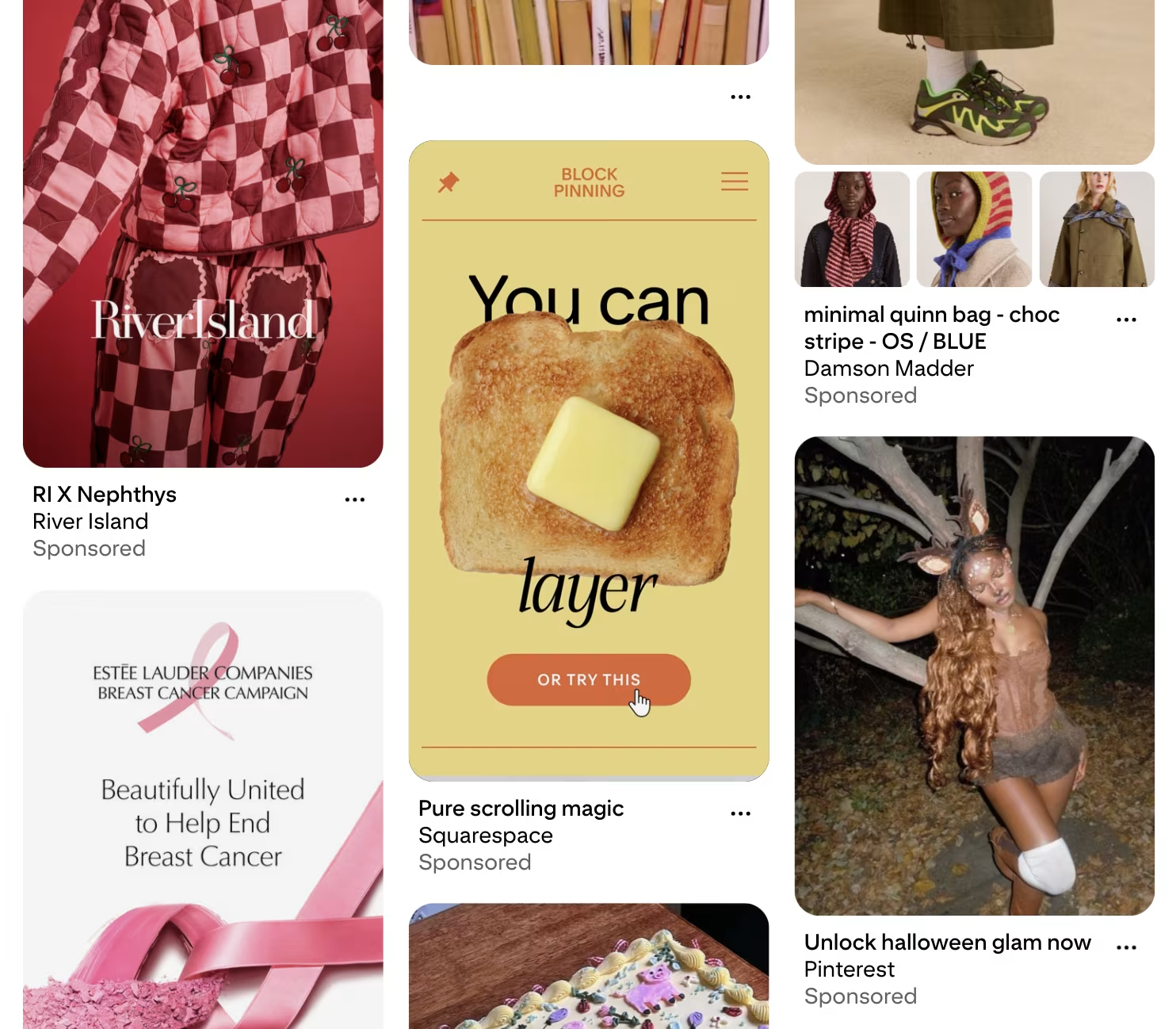
That quiet satisfaction of discovering the perfect pin? Now, more often than not, it redirects you to a website.
The platform’s CEO says the future is AI-enabled shopping, with personalised recs, trend forecasting and algorithm-powered curation. It’s Pinterest as your personal shopper. But if it tips too far into automation, there’s a real risk it alienates the very audience it was built for: people who want to create beauty, not have it handed to them by an algorithm.
Still, when it comes to building a moodboard that feels deeply personal and visually driven, Pinterest remains unmatched. Let’s just hope it remembers what made it special in the first place.
Conclusion
Pinterest remains a powerful platform for discovery, inspiration and purchase. With 537 million global users and 15.5 million UK users (metricool.com), it offers a more curated, commerce‑friendly environment than other social networks. The dominant female user base and the high purchase intent make Pinterest attractive for lifestyle, home decor, fashion and DIY brands. UK marketers should focus on sustainability, authentic storytelling and shoppable pins to tap into a community where 61% of users convert (metricool.com).
Need help turning inspiration into sales?
Explore our Social Media Marketing Services to unlock Pinterest’s potential for your brand.
FAQs 📌
Pinterest had approximately 537 million monthly active users by Q4 2024 demandsage.com. Its ad tools reached 340 million users in January 2025 datareportal.com, reflecting continued growth.
The United Kingdom has about 15.5 million active Pinterest users, equating to roughly 22 % of the population metricool.com. This places the UK among Pinterest’s top markets datareportal.com.
Around 70% of Pinterest’s global audience is female datareportal.com. The platform is particularly popular with 18‑24‑year‑olds, who comprise roughly 29% of users demandsage.com. Women aged 25–34 form the largest age‑gender cohort notta.ai.
Yes. 85% of users worldwide have purchased products after seeing pins demandsage.com, and 61% of UK users have bought something due to branded content metricool.com. Pinterest shoppers also spend 80% more each month than shoppers on other platforms metricool.com.
Pinterest generated $3.6 billion in revenue in 2024, up 20.3% year‑on‑year businessofapps.com. The company’s net income was $1.8 billion, largely due to a deferred tax allowance businessofapps.com.
Love a good stat? Here’s else everything you need to know for 2025
- 📈 WhatsApp Statistics 2026: Users, Engagement & WhatsApp Business
- 📈 Podcast Statistics 2026: Growth, Spend & Demographics
- 📈 YouTube Statistics 2026: Shorts, Subscribers & Revenue
- 📈 TikTok Statistics 2026: Global & UK Insights for Marketers
- 📈 Influencer Marketing Statistics 2026: UK Trends, Spend & Compliance
- 📈 Reddit Statistics 2026: Users, Subreddits & Revenue
- 📈 Spotify Statistics 2026: User Demographics, Daily Usage & Revenue
- 📈 ChatGPT Statistics 2026: Sessions, Subscribers & Revenue
- 📈 YouGov Brand Rankings 2026: The World’s Most Loved Brands, Revealed
- 📈 Pinterest Statistics 2025: UK & Global Insights for Marketers
- 📈 Facebook Statistics 2025: UK & Global Insights for Marketers
- 📈 Snapchat Statistics 2025: Key UK & Global Insights for Marketers
- 📈 Instagram Statistics 2025: UK & Global Insights for Marketers
- 📈 LinkedIn Statistics 2025: What UK Marketers Need to Know
- 📈 35+ Must-Know Branding Statistics 2025 for Growth & Engagement
- 📈 35+ Must-Know Social Media Statistics 2025 for Growth & Engagement